


Skin & allergy care

Itchy Dogs and Cats: Skin and Allergy Care in Poulsbo

The tags jingling when they scratch at 2am. The licking that starts the moment the house goes quiet.

A beagle curled up asleep on a grey sofa at home
Itching has causes that can be found.

The yeasty smell off the ears you can pick up from across the room. An allergic pet is exhausting for everyone in the house, not just your dog or cat.

You've probably changed foods once or twice, tried the shampoo the pet store recommended, given Benadryl. It works for a week, or it doesn't work at all, and some part of you has started to accept that this is just how they are.

It doesn't have to be. Itching has causes, the causes can be found, and finding them is a process. That's the work we do here.

Ears, paws, and skin are usually one problem

Recurrent ear infections, licked paws, a rubbed face, and repeat skin infections are very often the same underlying problem showing up in different places. Allergic skin is inflamed skin, and inflamed skin and ears are where yeast and bacteria set up shop.

If you've treated your dog's ears four times in two years and that infection keeps coming back, the ears probably aren't the cause. They're the symptom. Treating each infection without addressing the allergy underneath is why the cycle repeats.

A black puppy scratching its ear on gravel in golden light
Step by step

How we work it up

Itching has several causes that overlap and stack, so we start with a complete history and physical exam. When did it start, where on the body, is it seasonal or constant, what's been tried, what helped and for how long, and what the flea prevention has actually looked like; your answers help point us in the right direction.

From there, the workup is stepwise. Depending on what we find, it may include skin and ear cytology to identify yeast or bacteria, skin scrapings to rule out mites, blood work to check internal organ health and thyroid levels, or cultures for bacteria and fungus when they're indicated. Our first priority is to get your pet comfortable and treat any infection or parasites present, and then find the root cause of the itch.

Each step is recommended for a reason, and you'll always know what we're looking for and why with a clear plan and transparent pricing.

The three usual suspects

Once infection and parasites are handled, allergies come down to three broad causes. Some pets have a clear-cut case of one type of allergy, while others have multiple allergies at once. The itching patterns can be very similar, making distinguishing one from another difficult.

A fluffy cream dog in a grassy field scratching its side with a hind leg
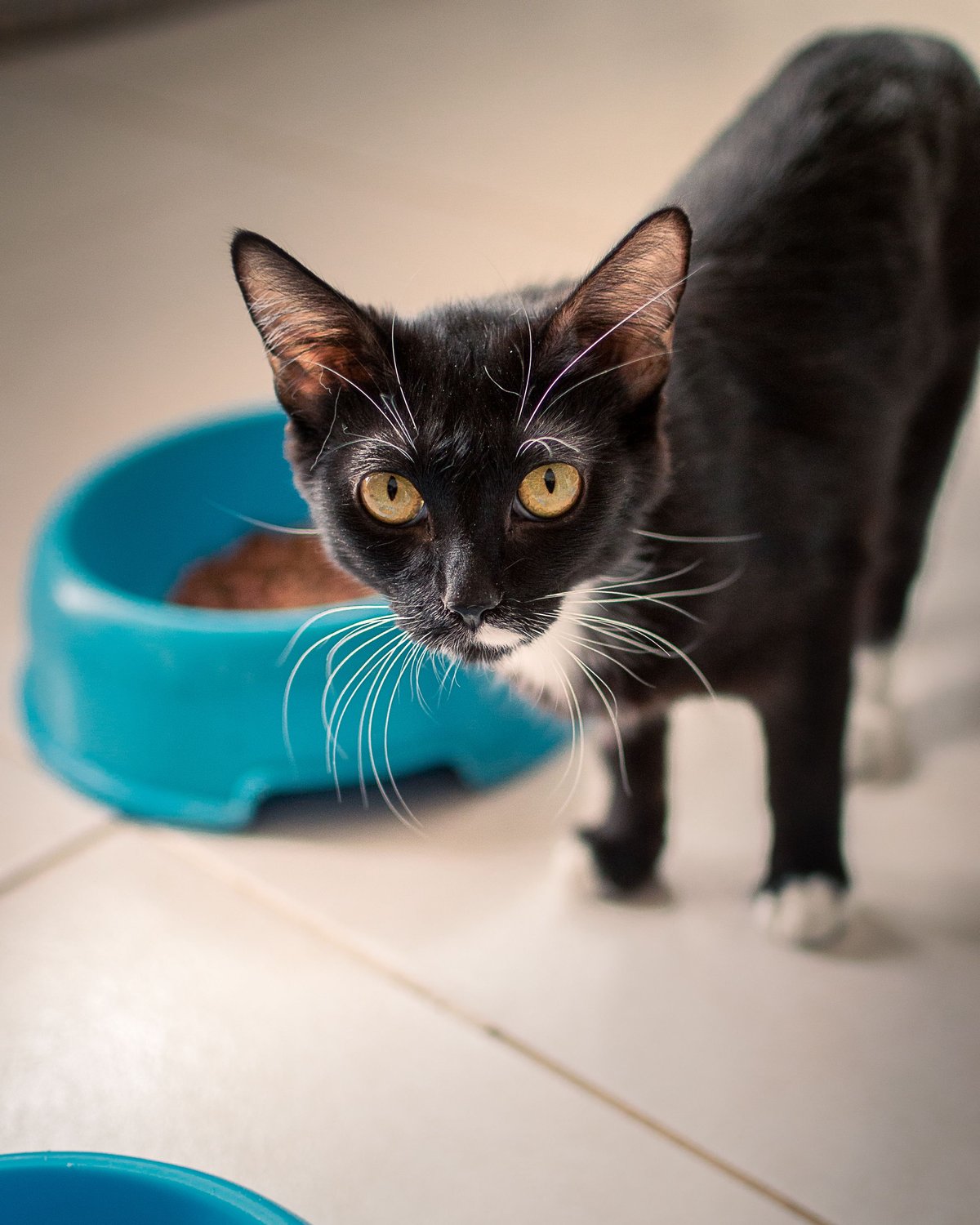
A sleek black cat beside a teal food bowl, looking straight at the camera
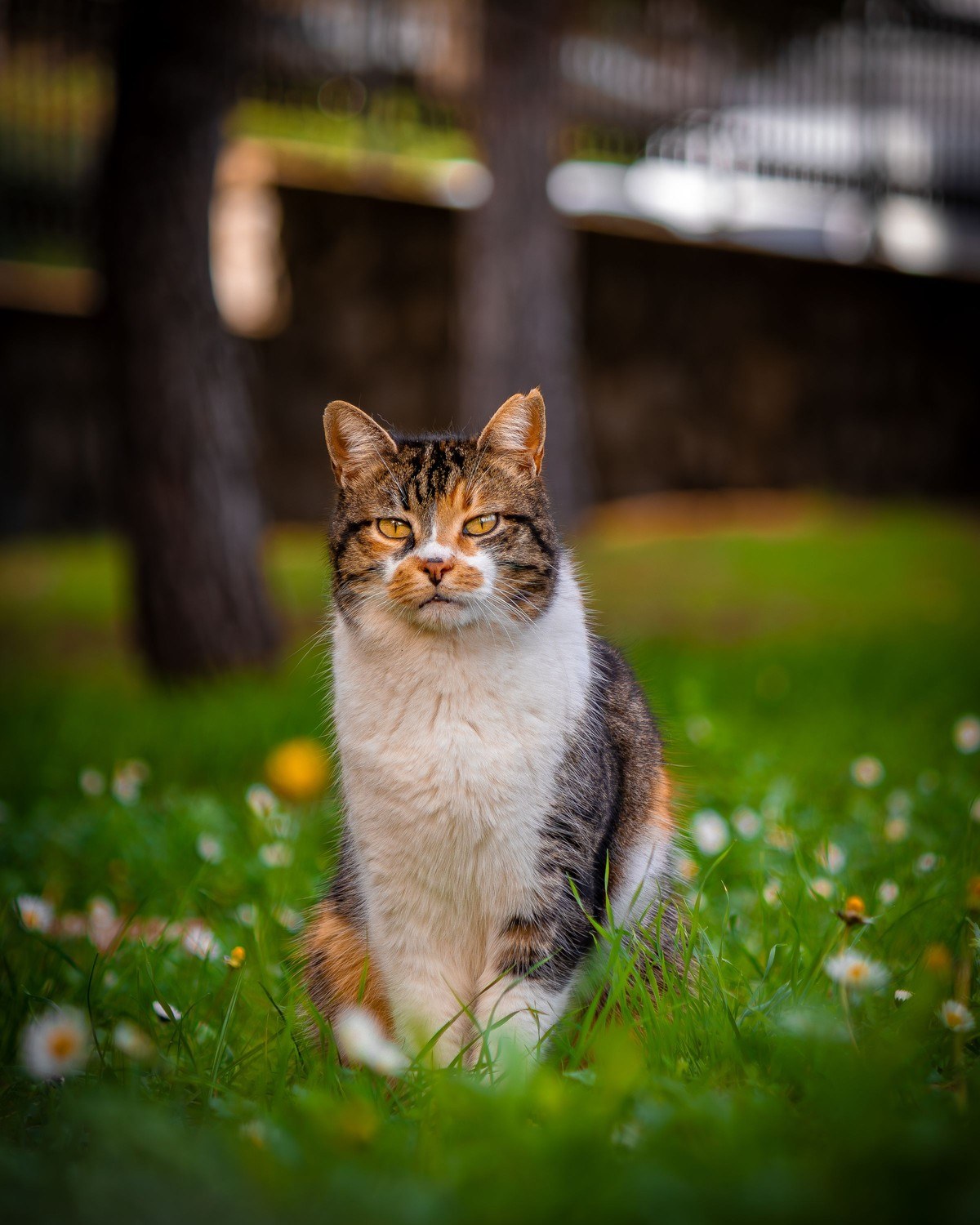
A tabby and white cat sitting in a sunlit meadow scattered with daisies

Flea allergy

In a pet allergic to fleas, a single bite can drive days of intense itching, so "I've never seen a flea on him" doesn't rule it out. For pets with other allergies, their skin is so sensitive that they react more to a flea bite than they would otherwise. Our mild, damp climate keeps fleas around all year, which makes year-round prevention a key part of allergy symptom control.
Food allergy

Less common than the internet suggests, and the most misunderstood corner of the whole subject. Pets are most commonly allergic to the protein in their diet, and can suddenly become allergic to something they've eaten for years with no problems.

Environmental allergy (atopic dermatitis)

The big one: a genetic tendency to react to pollens, molds, dust mites, grasses, and other things in the world. It usually starts between one and three years of age. Some breeds are more prone to environmental allergies, like Retrievers, West Highland White Terriers, Boxers, and Shar Peis.

How allergies get diagnosed

Finding the allergic trigger in a pet comes down to specific tests and medication trials.

Flea allergies are the easiest, since the itching pattern is typically the most clear. These pets often lick and chew their lower back and rear end relentlessly, and if the symptoms improve with good flea control, that's a large part of the picture.

Food allergies are more difficult. There's no blood test for them, and rotating through store-bought foods won't answer the question either, because most share ingredients and nothing is actually eliminated. The only reliable approach is a strict elimination trial: a prescription diet with a novel or hydrolyzed protein, fed exclusively for a set number of weeks, with nothing else crossing their lips, followed by a controlled challenge to confirm what you learned. If we suspect food, we'll set up a trial and coach you through it, because done right, it gives a real answer.

Environmental allergies sometimes can be narrowed down by seeing symptoms come and go as seasons change, but our mild climate makes that harder, especially since many pets are allergic to more than one trigger. Blood testing can help pinpoint which environmental allergens your pet reacts to, and that list is what immunotherapy gets built from. It isn't a food allergy test, no matter how it's marketed. For difficult cases, intradermal skin testing with a dermatologist may be needed.

Allergies in the Pacific Northwest

Living on the Kitsap Peninsula shapes what walks through our door.

Tree pollen in spring, grasses through summer, weeds into early fall, and a mild, damp climate that keeps mold, dust mites, and fleas comfortable most of the year.

Some pets flare seasonally; others itch year-round because several triggers overlap.

What we'll give you is your pet's actual pattern, drawn from their history, their response over time, and testing when it's warranted, rather than a guess about the cedar tree in your yard.

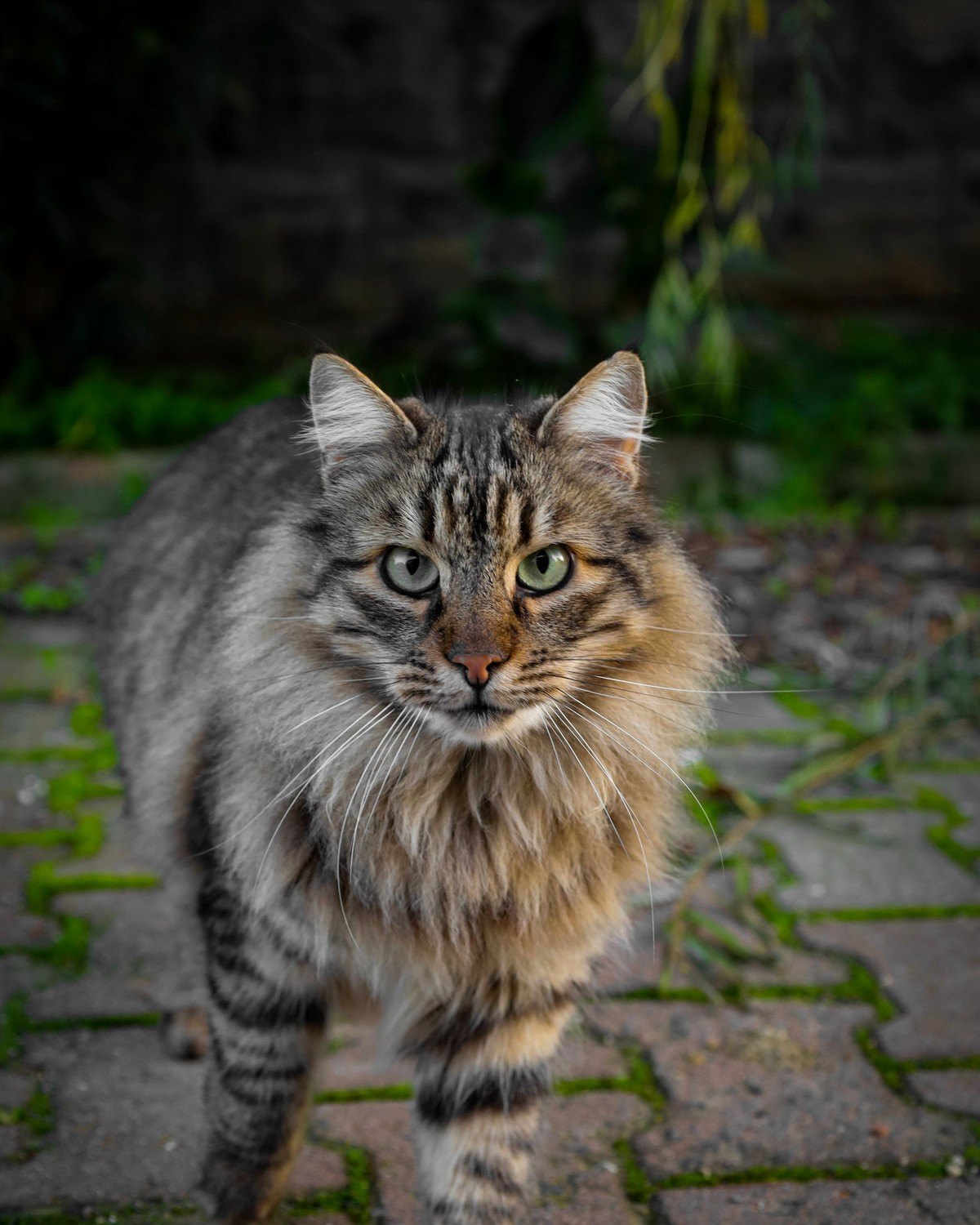
A long-haired tabby cat walking along a mossy stone path
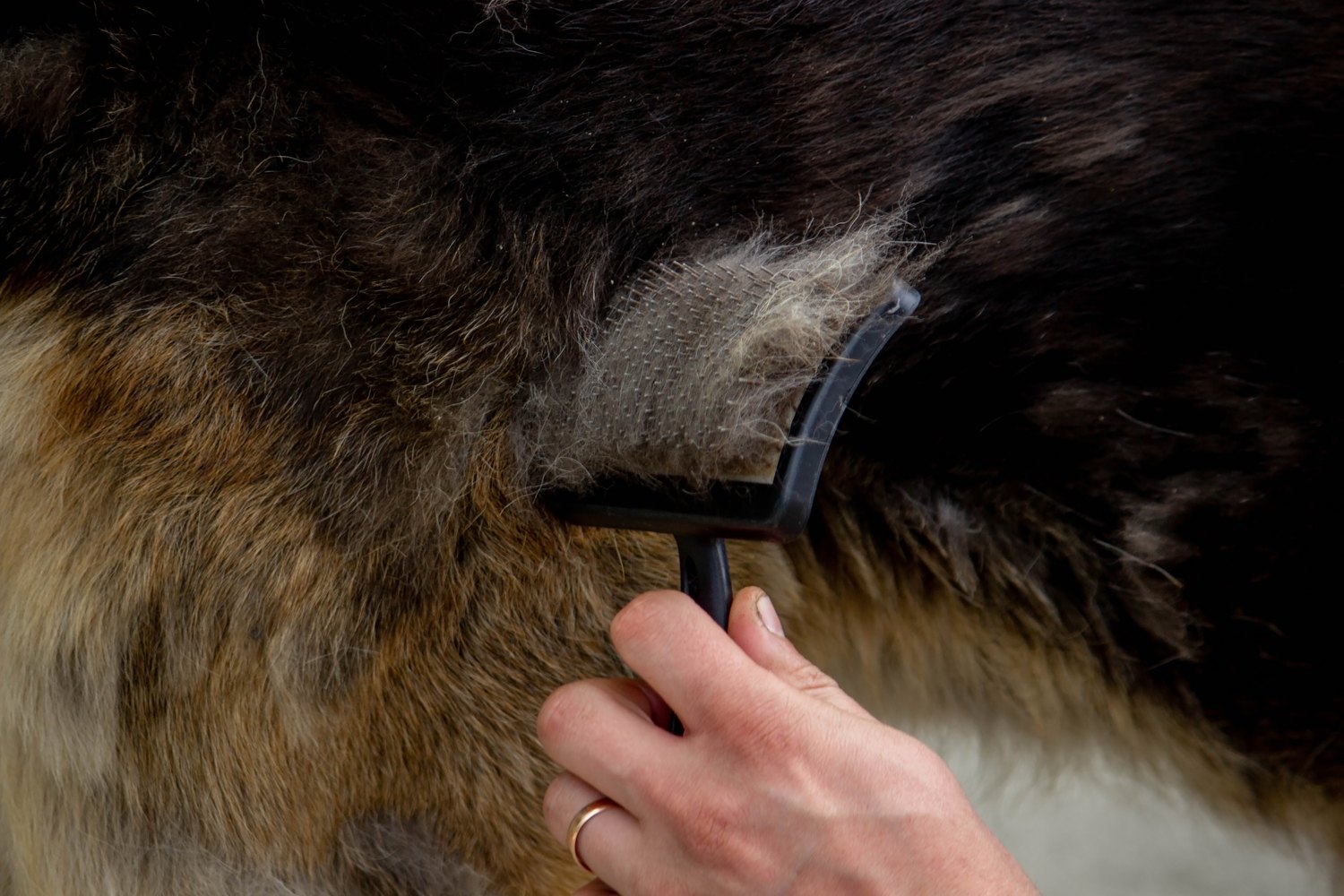
A bare hand drawing a grooming comb through a dog's thick coat

When it isn't allergy at all

Some problems look like allergies, or can make allergies worse, but require an entirely different plan.

An underactive thyroid can thin the coat and invite recurring skin infections. Cushing's disease changes skin and coat in ways that look dermatologic but are hormonal. Autoimmune skin conditions can mimic allergy while needing entirely different treatment.

This is why the methodical workup matters, and why we recommend bloodwork when a case is recurrent, severe, unusual, or simply not responding the way it should. Treating "allergies" that are actually a thyroid problem wastes months of your pet's comfort. When something rarer is truly in play, we'll say so and get you to the right depth of care.

There's no single allergy treatment, because there's no single allergic pet. Most pets use a combination of treatments, layered together for the best results. Plans are built per patient and usually combine a few tools:

  • Itch control: Cytopoint injections and Apoquel target the itch pathway itself, work quickly, and have fewer side effects than steroids. Cyclosporine is a slower option that calms the immune response driving the itch, reaching full effect over several weeks, which makes it useful for long-term control. Steroids may still be used for certain patients when the case calls for it.
  • Treating the secondary infections: Antibiotics or antifungals, oral or topical, are used when an infection has set in from the scratching, licking, and skin damage.
  • Rebuilding the skin barrier: Medicated shampoos and topical therapy decrease itchiness, prevent infections, and improve skin health. Sprays, wipes, and mousses can be used between baths.
  • Ear treatment: Keeping ear infections controlled through regular cleaning with the right products, medication when needed, and long-acting treatments applied here, so keeping the ears clear doesn't depend on getting drops into an unwilling pet twice a day.
  • Prescription diets: When food is part of the picture, the right diet can make all the difference. A diet elimination trial using a prescription diet is the best way to decrease food-related symptoms.
  • Relentless flea prevention: A non-negotiable part of allergic pet management. Every pet in the home needs year-round flea prevention.
  • Immunotherapy: The best way to reduce environmental allergy symptoms long-term by retraining the immune system, using allergen-specific immunotherapy formulated after testing for triggers.

A word on what doesn't work well:

  • Frequent bathing with pet store or human shampoos strips the skin barrier that's already compromised
  • Most home remedies for itching, like apple cider vinegar, either do nothing or make the irritation worse
  • Antihistamines like Benadryl work for a few pets, but most don’t have good symptom relief
  • The wrong diet, like over-the-counter limited ingredient diets, muddle food trial results

Bring in whatever you've been using and we'll tell you what's worth keeping.

If steroids are what's kept your pet comfortable so far, we understand why. Repeated short courses do quiet the itch, but each one buys a few weeks without moving the case forward, and the side effects accumulate. We'd rather use them deliberately, for the right flare in the right patient, as part of a plan that's actually going somewhere.

Prescription diets, flea prevention, and medicated shampoos are all available through our online store, and our team will create a treatment plan personalized to your pet.

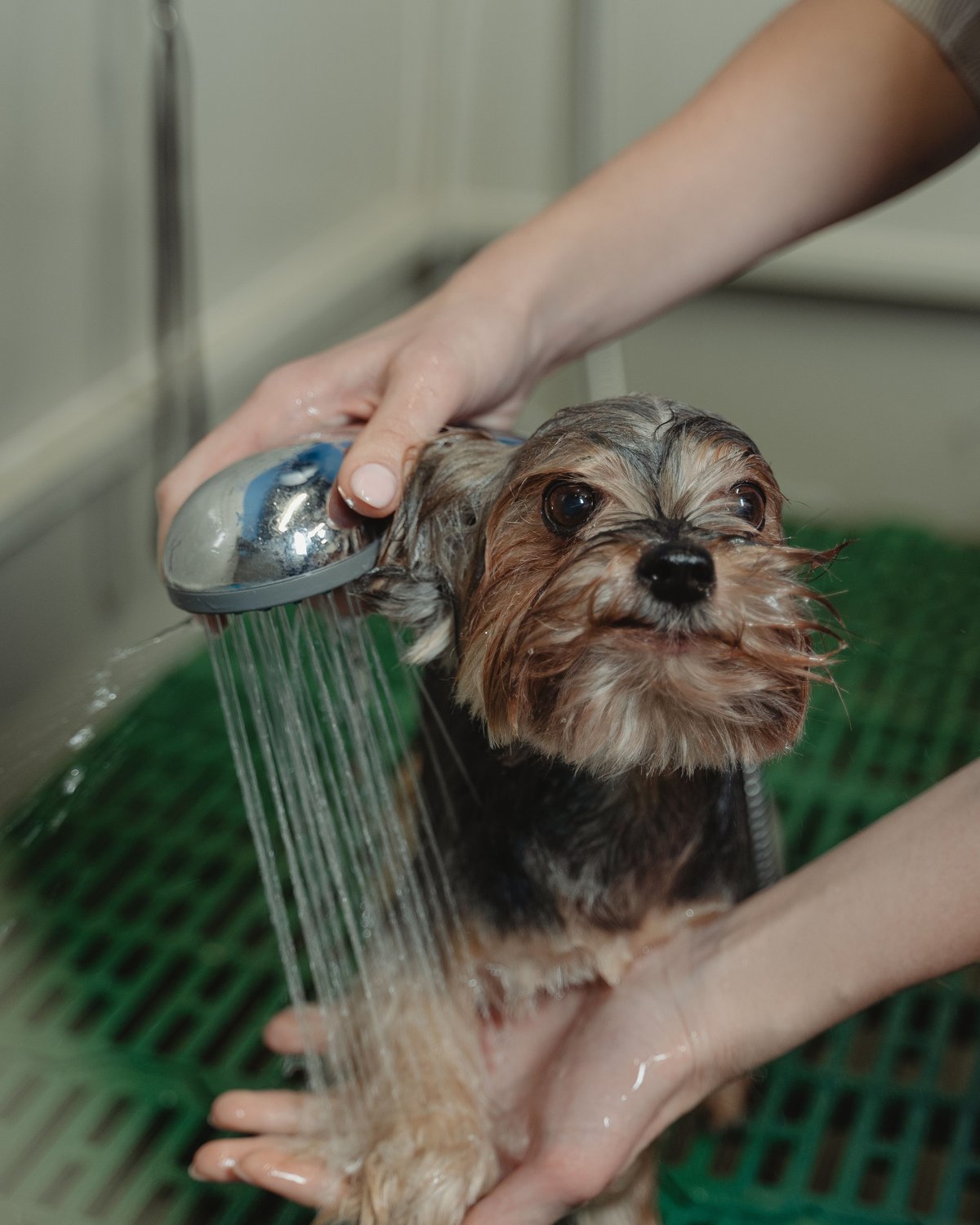
A Yorkshire terrier being gently rinsed with a hand shower, bare hands only
Controlled, not cured

The long game

Allergies, especially to the environment, are controlled, not cured. One flea bite, one stolen mouthful off your plate, or one shift in the season can all cause a flare up of symptoms. Expect a stabilization phase while we quiet the flare and the infections, then maintenance: the right combination of prevention, skin and ear care, and medication or immunotherapy, adjusted as seasons and your pet change.

This is where most allergy plans come apart. Your pet looks great, the medication feels unnecessary, the flea prevention slides, and six weeks later you're back where you started with a new infection on top. Maintenance is the part that's working, even when it looks like the part you don't need anymore. Allergy management has the best results when you have a relationship with a veterinary team who understands your pet and your lifestyle.

Finding the right combination of treatments can take some patience. What success looks like is concrete, though: fewer bad days, fewer infections, better sleep for everyone in the house, and a pet who gets to go back to being themselves. Most of the allergy cases we see get there without a referral; for the rare severe or unusual case that doesn't, we'll recommend a veterinary dermatologist we trust.

How much does allergy care cost in Poulsbo?

These prices are current as of August 2026; we're always happy to provide an estimate, so nothing gets added to the plan without you knowing what it costs.

The exam is $93,

the same comprehensive exam as any other visit. With a chronic itch case it's where the actual progress starts, because the history and the pattern guide the whole workup.

A Cytopoint injection runs $85 to about $250 for dogs, depending on weight.

Relief typically arrives within days and lasts four to eight weeks, so it's a repeating cost rather than a one-time one. For pets who need it long-term, we'll talk through whether immunotherapy or a combination approach makes sense for your budget.

Environmental allergy testing (blood panel) is about $340,

used to formulate immunotherapy once environmental allergy is diagnosed. Immunotherapy is a long-term commitment, with full results usually seen at 12 to 18 months, and the cost varies depending on which allergens need to be included.

A bath with us is about $37,

which matters when medicated bathing is part of the plan and keeping a 70-pound dog in your tub through a ten-minute lather, twice a week, is not.

Other diagnostics like skin scrapings are priced per test and always quoted first. If budget shapes what we do first, say so; we'll sequence the plan around what matters most. We offer both CareCredit and ScratchPay to make financial planning easier.

Good questions

Frequently asked questions

The usual causes are flea allergy, food allergy, environmental allergy, or a skin infection riding along with one of them, and they stack. When it happens and where on the body narrows it down, which is why the workup starts with history and exam instead of a guess.

Relief and answers move on different clocks, and it helps to know that going in.

Comfort can come quickly. Apoquel and steroids provide itch relief within hours. Cytopoint often takes the edge off within days, and an active skin or ear infection usually clears in a few weeks of treatment. That part is not the slow part.

Finding the cause takes longer. A food elimination trial runs eight to twelve weeks before the challenge that confirms it. Environmental allergy is often identified over a season or two of watching how your pet responds, and if immunotherapy is the right path, full results usually show at 12 to 18 months, with improvement building along the way.

So the honest shape of it: comfortable in days to weeks, diagnosed in months, and settled into a plan that holds over the course of a year. Nobody waits in misery while the answers come in.

Switching store-bought foods almost never answers the question, because most share ingredients and none are made to diagnostic standards. A real answer takes a prescription elimination trial followed by a food challenge. We'll set it up properly if food is a genuine suspect.

Recurring ear infections are one of the most common faces of underlying allergy. The inflamed ear is where yeast and bacteria thrive; treat only the infection and it returns, treat the allergy too and the cycle can finally break.

Environmental allergies are typically lifelong; the goal is management, not a promised cure. Managed well, most allergic pets have far fewer bad days, far fewer infections, and a normal, comfortable life.

Talk to us before you do. Looking great is what a working plan looks like, and stopping it is the most common reason a good stretch ends in a flare and a new infection. If the plan feels like more than it needs to be, we can often simplify it, taper something, or shift to seasonal treatment. That's a different thing than stopping cold and hoping.

Yes. In a flea-allergic pet, one bite can drive days of itching, and adult fleas spend most of their time off the pet. Around here they're a year-round consideration, which is why prevention is part of allergy treatment.

Yes, coordinated with an outside laboratory, to identify environmental allergens and build allergen-specific immunotherapy. It's the path to treating the cause. It isn't a food-allergy test; that's what the elimination trial is for.

When disease is severe, unusual, or not responding despite a proper workup, or when we suspect an immune-mediated condition that needs specialist depth. Most allergy cases never need one, and if yours does, we'll tell you plainly and coordinate the referral.

Quite possibly. Cats show allergies differently than dogs: overgrooming the belly or inner thighs bald, tiny scabs along the back and neck (miliary dermatitis), and licking that reads as grooming rather than scratching. Stress overgrooming is real too, and the two can look nearly identical, which is exactly why the workup matters. A bald belly has a cause, and it's worth finding.

Ready when you are

Ready to get ahead of the itch?

Clifton Hollow Animal Hospital is a veterinarian-owned practice providing skin and allergy care for dogs and cats in Poulsbo and across the Kitsap Peninsula, including Silverdale, Bainbridge Island, Kingston, and Bremerton. Bring the history, even the messy parts about everything you've already tried. That history is data, and it shortens the road.

Your first visit comes with our BOLD Guarantee: if it doesn't exceed your expectations, we won't charge you for it.